

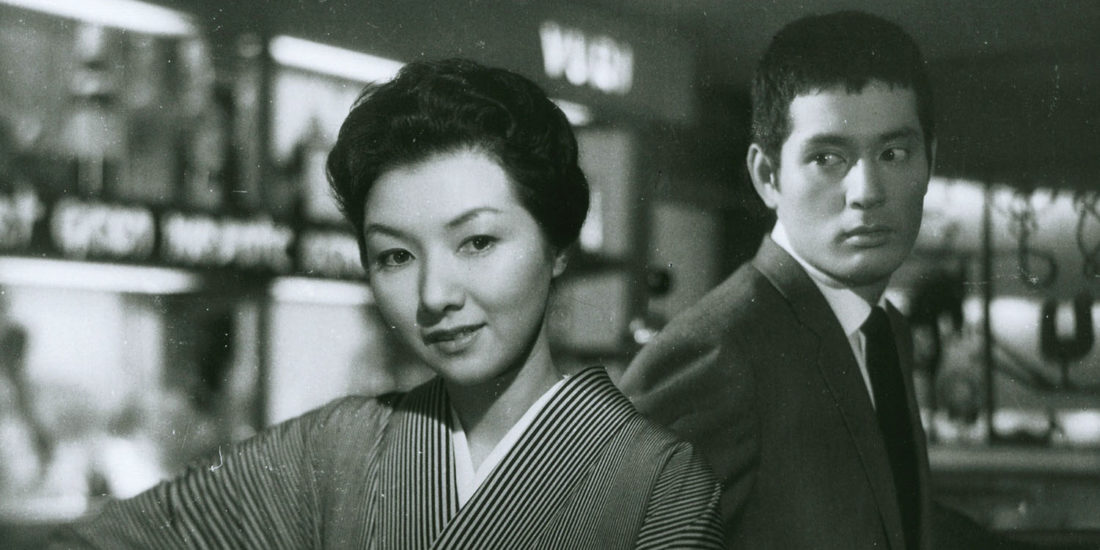
“Revisiting Keisuke Kinoshita through a Queer Lens” by Yutaka Kubo of Kanazawa University, Japan, has been announced as a keynote to be presented at The 3rd Kyoto Conference on Arts, Media & Culture (KAMC2022), which will be held alongside The 13th Asian Conference on Media, Communication & Film (MediAsia2022), October 17–20, 2022.
The KAMC/MediAsia2022 Organising Committee is currently calling for papers to be presented at the event. Submit your abstracts by August 1, 2022, to participate.
To participate in KAMC/MediAsia2022 as an audience member, please register for the conference.
This plenary will also be available for IAFOR Members to view online. To find out more, please visit the IAFOR Membership page.
Abstract
Revisiting Keisuke Kinoshita through a Queer Lens
The works of Japanese filmmaker Keisuke Kinoshita have long been underappreciated in Western academic circles, despite enjoying critical success in Japan and despite his enormous contribution to the film industry during the second golden age of Japanese cinema in the 1950s. Ever since his passing in 1998, film scholars and critics in Japan have sought to reframe his career through the perspectives of war memory, family, and gender. One of these attempts includes film critic Ikuko Ishihara’s comprehensive analysis of masculinity and male vulnerability in Kinoshita’s films, which paved the way for examining expressions of non-normative gender, sexuality, and body in the post-war era. Following Ishihara’s work, some scholars have begun to focus on Kinoshita’s aesthetic obsession with non-normativity.
How do Kinoshita’s films help us understand Kinoshita’s complex relationship with love, attachment, and intimacy? Sharing elements from my monograph Yuyakegumo no kanata ni: Kinoshita Keisuke to kuia na kansei (Over the Sunset: Kinoshita Keisuke and Queer Sensibility), this talk will introduce the ways to trace and enjoy the fluidity of Kinoshita’s queer sensibility in his commercial works from the 1940s to the 1950s, in addition to re-contextualizing his home movies, shot between 1937 and 1949, through a queer lens.
Speaker Biography
Yutaka Kubo
Kanazawa University, Japan
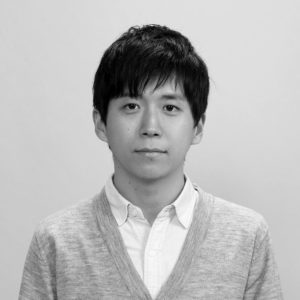 Yutaka Kubo is an associate professor of film studies in the School of International Studies at Kanazawa University, Japan. He specializes in post-war Japanese cinema and queer theory-based analysis of film. He is the author of Over the Sunset: Keisuke Kinoshita and Queer Sensibility (Nakanishiya Shuppan, 2022) and he curated the exhibition Inside/Out: LGBTQ+ Representation in Film and Television for the Tsubouchi Memorial Theatre Museum at Waseda University in 2019. Some of his recent publications include “Fading Away from the Screen: Cinematic Responses to Queer Ageing in Contemporary Japanese Cinema” in Japanese Visual Media: Politicizing the Screen (2021) and “Still Grieving: Mobility and Absence in Post-3/11 Mourning Films” in the Journal of Japanese and Korean Cinema (2019). He is currently working on two projects: an exploration of queer aging in Japanese cinema and television since the 1990s, and extensive research into the personal, cultural, historical, and political roles of production, distribution, and consumption of food in queer films worldwide since the 1960s.
