

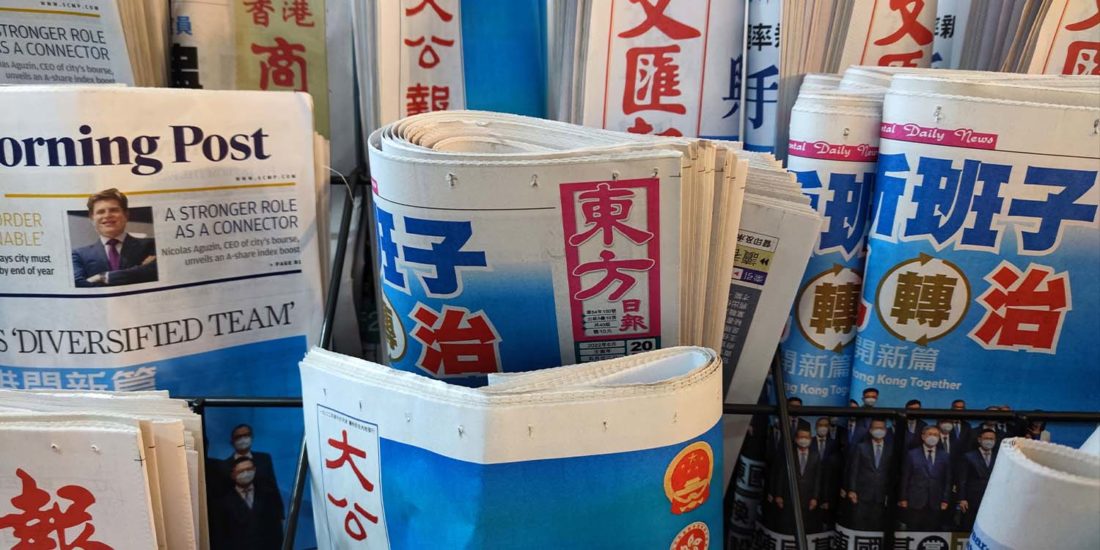
A student panel from the Osaka School of Public Policy (OSIPP) at Osaka University will present “News Media and the World” at The 3rd Kyoto Conference on Arts, Media & Culture (KAMC2022) and The 13th Asian Conference on Media, Communication & Film (MediAsia2022). The panel will be moderated by Organising Committee member Virgil Hawkins of Osaka University, Japan.
To participate in KAMC/MediAsia2022 as an audience member, please register for the conference.
This plenary will also be available for IAFOR Members to view online. To find out more, please visit the IAFOR Membership page.
Abstracts
SDGs Coverage in the Media: Case Study of a Japanese Newspaper
United Nations’ Sustainable Development Goals (SDGs) identified 17 goals to realise a sustainable world with no one left behind. The first of these goals is the eradication of poverty. While SDGs are widely adopted by Japanese society across both public and private entities, the actual content of this narrative remains to be effectively characterised. The presenter uses Japanese newspapers to examine the common focus of the SDGs within Japanese newspaper coverage.
Azusa Iwane
Osaka School of Public Policy (OSIPP), Osaka University, Japan
 Ms Azusa Iwane is a doctoral student at the Osaka School of International Public Policy, Osaka University. Her Master’s thesis dealt with how African poverty issues are represented in the Japanese media. She conducted a series of field studies in Zambia to better grasp the effective poverty experienced by mining communities present in Zambia with the collaboration of the Dag Hammarskjöld Institute for Peace and Conflict Studies, Copperbelt University. Her current research topic focuses on the agenda-setting process taking place within NGOs, more specifically regarding how NGOs are problematizing ‘African poverty’. She has extensive experience working with international development NGOs which led her to be enrolled by the Japanese Ministry of Foreign Affairs as part of their NGO internship program. She also is a vice-project manager and editor at Global News View (GNV) which is an independent media outlet introducing the Japanese audience to international news overlooked by domestic mainstream media. She is one of the main podcast hosts of GNV.
The Not So 'Liberal' Media: 2020 Presidential Election Coverage in American Broadcast Media
Using a case study of MSNBC's broadcast coverage of the 2020 race for the Democratic presidential nomination, this study tests the claim of a 'liberal' media bias by quantitatively and qualitatively analysing coverage of 'liberal' presidential candidates. Results show that MSNBC covers 'liberal' candidates in a more negative manner than 'moderate' candidates, refuting the claim of a 'liberal' media bias.
Namie Kawabata Wilson
Osaka School of Public Policy (OSIPP), Osaka University, Japan
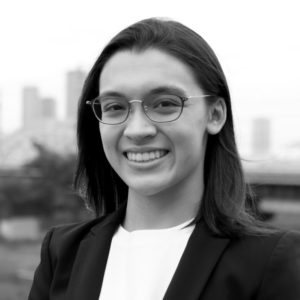 Namie Kawabata Wilson is a graduate student at the Osaka School of International Public Policy (OSIPP), Osaka University. Before joining OSIPP, she received her bachelor’s degree at the School of Human Sciences at Osaka University.
Namie Kawabata Wilson specialises in media studies, focusing on US election coverage. Her past research includes analysis on the claim of a ‘liberal’ media bias in the American mainstream media. Her current research analyses how the mainstream media covers Vice President Kamala Harris compared to former White male vice presidents.
Namie Kawabata Wilson has also written articles for Global News View, headed by Professor Virgil Hawkins, a Japanese research centre that provides comprehensive and objective information about world issues. She served as the President of the International Student Conference (2019-2020), a summer program for students around the world to discuss solutions for global issues. She was the host and organiser of the Global Youth Conference on Fully Autonomous Weapons (2020-2021), working with Human Rights Watch and the Campaign to Stop Killer Robots to submit a proposal of recommendations for the Japanese government.
Aid Bureaucracies in Times of Humanitarian Crisis: How Media and Congressional Interest Shape USAID Responses to Complex Humanitarian Emergencies
There has been much speculation on the determinants of foreign aid. While the motivations underpinning aid – geostrategic importance, economic self-interest, and humanitarian need – have become more or less accepted, what is less understood is how aid bureaucracies respond to the preferences of political actors such as elected officials or the media. In clarifying this relationship, this research examines how US media and congressional discourses (measured in attention volume and complexity) impact USAID obligations made to countries experiencing complex humanitarian emergencies. It finds that both indicators for both the media and Congress have significant impacts on aid allocations even above and beyond the impact of need indicators.
Kelsey Oliver Imanishi
Osaka School of Public Policy (OSIPP), Osaka University, Japan
 Kelsey Oliver Imanishi is a PhD candidate at the Osaka School of International Public Policy (OSIPP), Osaka University, Japan. Her research focuses primarily on political communication, foreign policy agenda setting, and the role of the media during times of humanitarian crisis and natural disasters. Her most recent publication is “The Boy on the Beach: Shifts in US Policy Discourses on Syrian Asylum Following the Death of Alan Kurdi” in Media, Culture & Society (2022). She is currently continuing work on her dissertation, which is tentatively titled “Toward a More Holistic Understanding of Media Influence on Foreign Policy: Quantifying Media Discourse Diversity and Its Impact on US Aid Commitments to International Humanitarian Crises”, wherein she explores the impact of complex media narratives of crises on the aid bureaucracies tasked with responding to them. In addition to these research interests, Kelsey also has a background in rhetorical analysis, journalism studies, and international relations.
News Media Influence on Policymakers’ Response to Natural Disaster: The Case of Forest Fires of 2019 in Indonesia
Press freedom in Indonesia was not given to the news media until 1998 when the country had a major democratic reform. The study aims to understand the current role that the news media plays with press freedom and its interaction with the Indonesian government. The study is using the 2019 forest fire as its case study as there was a major fire and a presidential election happening in the same calendar year.
Syafiq Syaikhul Akbar
Osaka School of Public Policy (OSIPP), Osaka University, Japan
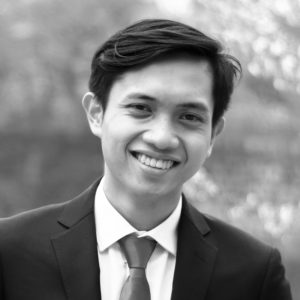 Syafiq is currently a second-year Master’s student at Osaka School of International Public Policy, Osaka University, Japan. Prior to entering Osaka University, he worked for local television and radio stations as a TV presenter and radio announcer. He is currently researching the news media in Indonesia and its interaction with the Indonesian government using the forest fire case of 2019 as the case study.
